City Guides

Hagia Sophia Square Thessaloniki

Hagia Sophia Square Thessaloniki

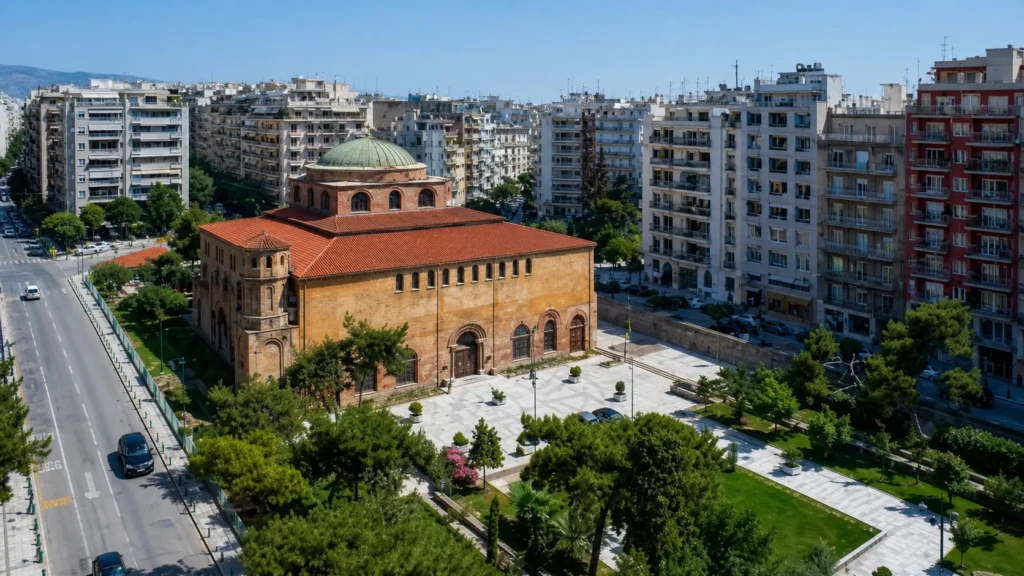
There is a corner of Thessaloniki’s city centre where a 7th-century Byzantine church stands surrounded by modern cafes, bustling pedestrian streets, and an evening social scene that runs until well past midnight. Hagia Sophia Square Thessaloniki is one of those rare urban spaces where deep history and contemporary daily life exist not in parallel but genuinely intertwined: the same square where a UNESCO World Heritage church has stood for over 1,300 years is also the square where locals meet for morning coffee, afternoon shopping, and evening drinks. It is a place that captures the essential character of Thessaloniki, a city that lives with its past rather than merely preserving it.

The Church of Hagia Sophia

A Byzantine Monument

The Church of Hagia Sophia (Holy Wisdom) at the centre of Hagia Sophia Square Thessaloniki is one of the oldest and most important ecclesiastical buildings in the city. Dating to the 7th or 8th century AD, the church was built during the period when Thessaloniki was the second most important city of the Byzantine Empire, and it served as the city’s cathedral for several centuries.

The architecture follows a domed Greek cross plan, a form that would become standard in Byzantine church design but that was innovative at the time of construction. The dome itself, spanning approximately 10 metres, is the visual anchor of both the church interior and the surrounding square. Standing beneath it and looking up at the gold-ground mosaics that decorate the apse and the dome is one of the most powerful artistic experiences Hagia Sophia Square Thessaloniki has to offer.

The Mosaics and Interior

The church’s greatest treasures are its interior mosaics, which date to different periods of the building’s history:

  • The Apse Mosaic: Depicting the Virgin Mary enthroned with the Christ Child, this is one of the finest surviving examples of early Byzantine mosaic art in Greece. The gold background, the formal composition, and the serene expression of the figures place it among the most important works of its period.
  • The Dome Mosaic: Originally depicting the Ascension of Christ, with the figure of Christ surrounded by angels and the twelve apostles. Parts of this mosaic have been damaged or lost over the centuries, but what remains is extraordinary.
  • The Iconostasis: The carved wooden screen separating the nave from the sanctuary, decorated with icons that span several centuries of Byzantine and post-Byzantine painting.

During the Ottoman period, the church was converted into a mosque (Ayasofya Camii), and some of the mosaics were covered with plaster. Following the liberation of Thessaloniki in 1912, the building was reconsecrated as an Orthodox church, and restoration work has gradually uncovered and conserved the original decorative programme.

UNESCO Status

The Church of Hagia Sophia is inscribed on the UNESCO World Heritage List as part of the “Paleochristian and Byzantine Monuments of Thessaloniki,” the same designation that covers 15 sites across the city including the Rotunda, the Arch of Galerius, and the Monastery of Vlatadon. This recognition places Hagia Sophia Square Thessaloniki at the centre of one of Europe’s most concentrated collections of early Christian and medieval monuments.

The Neighbourhood Around the Square

Cafes and All-Day Social Life

The area surrounding Hagia Sophia Square Thessaloniki is one of the most vibrant social neighbourhoods in the city centre. The square itself and the streets radiating from it are dense with cafes, cafe-bars, and all-day dining spots that serve the full range of Thessaloniki’s social calendar:

  • Morning: Speciality coffee shops and traditional cafes serve Greek coffee, freddo cappuccino, and breakfast pastries to a mixed crowd of commuters, students, and residents starting their day.
  • Afternoon: The outdoor tables fill with people lingering over long coffees, working on laptops, or meeting friends. The Mediterranean habit of extending a single coffee into a two-hour social event is fully operational at Hagia Sophia Square Thessaloniki.
  • Evening: As the sun sets, the cafes transition to bars. The drink menu shifts from coffee to cocktails, wine, and local spirits. The atmosphere becomes livelier, the music comes up, and the neighbourhood takes on the quality of an extended, open-air social gathering.

Bars and Nightlife

The streets around Hagia Sophia Square Thessaloniki form part of the broader nightlife ecosystem of the city centre. The bar scene here tends toward the sophisticated end of the spectrum: wine bars, cocktail bars, and venues with curated music programmes. The outdoor seating that extends across the pavements in the warmer months creates a seamless connection between indoor and outdoor socialising that is characteristic of Thessaloniki’s Mediterranean approach to nightlife.

The area is well positioned between the more alternative scene around Navarinou Square and the more mainstream nightlife of Valaoritou and Ladadika, making Hagia Sophia Square Thessaloniki a versatile starting point for an evening that can move in any direction.

Shopping and Retail

The streets surrounding the square include a mix of retail options: clothing boutiques, shoe shops, accessories stores, and the kind of small, specialised retailers that give a neighbourhood its individual character. The area connects directly to Ermou Street, one of the city’s main commercial streets, and is a short walk from Tsimiski Street, providing easy access to the full range of the city’s shopping.

Visiting Hagia Sophia Square

Church opening hours: The church is generally open to visitors during the day, with free admission. Modest clothing is expected (shoulders and knees covered).

Best times:

  • Morning: For visiting the church interior in quiet conditions and seeing the mosaics in natural light.
  • Late afternoon: For the transition from daytime cafe culture to evening atmosphere, when the square is at its most atmospheric.
  • Evening: For the full social experience of the neighbourhood, when the bars and outdoor tables are in full swing.

Getting there: Hagia Sophia Square Thessaloniki is centrally located at the intersection of Agias Sofias Street and Ermou Street, a 5-minute walk from Aristotelous Square and a 10-minute walk from the waterfront.

Combine with: Aristotelous Square, Tsimiski Street shopping, the Navarinou axis and Kamara area, and the waterfront promenade. The square sits at a crossroads of the city centre’s main neighbourhoods, making it an ideal hub for exploring the centre on foot.

Hagia Sophia Square Thessaloniki is the kind of place that reveals a fundamental truth about this city: in Thessaloniki, history is not something you visit. It is something you have coffee next to, something you walk past on your way to dinner, something that becomes part of the background texture of daily life. The church has been standing here for 1,300 years, and the cafe tables have been set around it for as long as anyone can remember. Neither seems likely to move.


Living and Renting Near Hagia Sophia Square

The area around Hagia Sophia Square Thessaloniki is one of the most versatile residential neighbourhoods in the city centre. It combines the convenience of a central location with a genuine social scene that runs from morning coffee to late-night drinks. Apartments here range from older buildings with character to recently renovated flats in mid-rise blocks, with options for every budget from affordable student shares to spacious one-bedroom flats.

The neighbourhood’s greatest asset for residents is its connectivity. Tsimiski Street is a two-minute walk away for shopping. Aristotelous Square and the waterfront are within ten minutes on foot. The Navarinou axis and the university district are equally close in the other direction. This centrality, combined with the all-day cafe culture and evening bar scene, makes the Hagia Sophia area one of the most popular choices for Erasmus students and young professionals.

The social energy of the neighbourhood is a double-edged sword: it means there is always something happening outside your window, which is either the best or worst feature of your flat depending on your temperament. For those who want to be in the thick of Thessaloniki’s social life, however, there are few better addresses than the streets around Hagia Sophia.

Based on ThessNest platform listings, studios and one-bedroom apartments around Hagia Sophia Square typically range from €400 to €550 per month. The area is especially practical for Erasmus+ students and digital nomads who want a central base between AUTH, Tsimiski Street, Aristotelous Square, and the waterfront.


Looking for a place to stay near Hagia Sophia Square? Browse verified rental listings, student housing, Erasmus+ accommodation, and digital-nomad stays on ThessNest. Whether you are an Erasmus+ student, international student, or digital nomad planning a flexible stay in Thessaloniki, ThessNest connects you with trusted hosts across the city.

Own a property near Hagia Sophia? List your property on ThessNest and reach international students, Erasmus+ tenants, and digital nomads looking for their next home in Thessaloniki.


Hagia Sophia Square Thessaloniki is the kind of place that reveals a fundamental truth about this city: in Thessaloniki, history is not something you visit. It is something you have coffee next to, something you walk past on your way to dinner, something that becomes part of the background texture of daily life. The church has been standing here for 1,300 years, and the cafe tables have been set around it for as long as anyone can remember. Neither seems likely to move.
Frequently Asked Questions

Based on ThessNest platform listings, one-bedroom apartments and studios around Hagia Sophia Square typically range from €400 to €550 per month. It is slightly more affordable than the immediate waterfront but still carries a city-centre premium. For anyone considering living near Hagia Sophia Thessaloniki, the appeal is the balance of central access, cafes, transport, and walkability to AUTH.

Yes. Hagia Sophia is one of the most practical central areas for Erasmus+ students, international students, and digital nomads. You can walk to AUTH, the waterfront, Aristotelous Square, and Tsimiski Street, while cafes and public transport are close by. ThessNest lists verified flexible stays and student-friendly flats in this area.

The area around Hagia Sophia is considered very safe at all hours. It is well-lit, residential, and has a constant flow of pedestrians due to the cafes and the pedestrianised streets extending toward the waterfront.

Neıgborhoods

Explore related neighborhoods

Continue with the neighborhood explorer to compare areas.

More city guides

Search

July 2026

  • M
  • T
  • W
  • T
  • F
  • S
  • S
  • 1
  • 2
  • 3
  • 4
  • 5
  • 6
  • 7
  • 8
  • 9
  • 10
  • 11
  • 12
  • 13
  • 14
  • 15
  • 16
  • 17
  • 18
  • 19
  • 20
  • 21
  • 22
  • 23
  • 24
  • 25
  • 26
  • 27
  • 28
  • 29
  • 30
  • 31

August 2026

  • M
  • T
  • W
  • T
  • F
  • S
  • S
  • 1
  • 2
  • 3
  • 4
  • 5
  • 6
  • 7
  • 8
  • 9
  • 10
  • 11
  • 12
  • 13
  • 14
  • 15
  • 16
  • 17
  • 18
  • 19
  • 20
  • 21
  • 22
  • 23
  • 24
  • 25
  • 26
  • 27
  • 28
  • 29
  • 30
  • 31
Size
Price
Amenities

Compare listings

Compare

Compare experiences

Compare

Compare listings

Compare

Compare experiences

Compare
Search

July 2026

  • M
  • T
  • W
  • T
  • F
  • S
  • S
  • 1
  • 2
  • 3
  • 4
  • 5
  • 6
  • 7
  • 8
  • 9
  • 10
  • 11
  • 12
  • 13
  • 14
  • 15
  • 16
  • 17
  • 18
  • 19
  • 20
  • 21
  • 22
  • 23
  • 24
  • 25
  • 26
  • 27
  • 28
  • 29
  • 30
  • 31

August 2026

  • M
  • T
  • W
  • T
  • F
  • S
  • S
  • 1
  • 2
  • 3
  • 4
  • 5
  • 6
  • 7
  • 8
  • 9
  • 10
  • 11
  • 12
  • 13
  • 14
  • 15
  • 16
  • 17
  • 18
  • 19
  • 20
  • 21
  • 22
  • 23
  • 24
  • 25
  • 26
  • 27
  • 28
  • 29
  • 30
  • 31
Size
Price
Amenities